Scenario Planning Without the Crystal Ball: How to Think in Multiple Futures
 M. Linden
Most planning processes share a quiet, catastrophic assumption: that the future will look roughly like the present, only more so. You take current trends, extend them forward, and build a plan around that single projected line. Then reality arrives sideways.
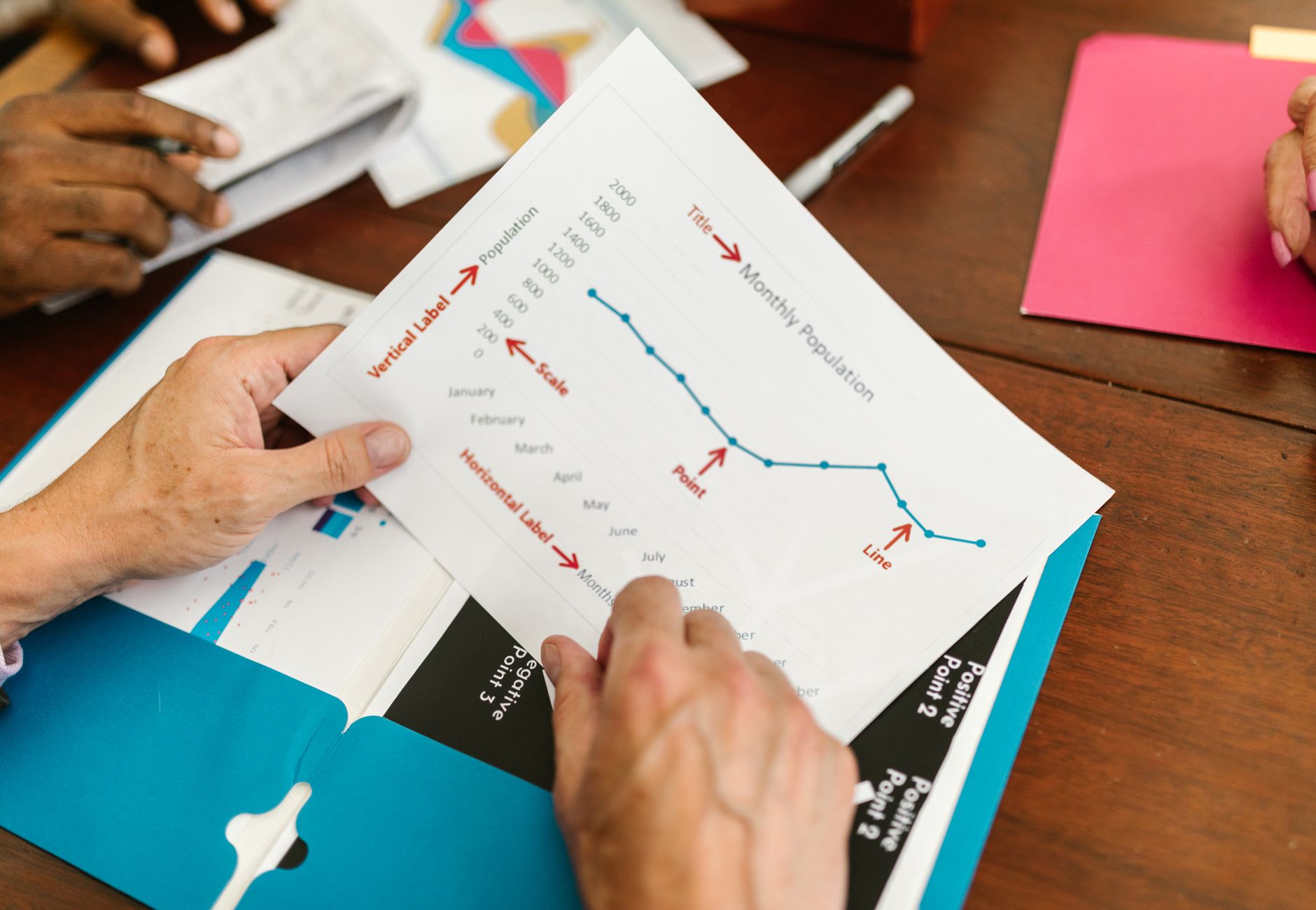 Photo by RDNE Stock project on Pexels.
Scenario planning is the antidote to that habit. Rather than betting everything on one forecast, you construct several distinct futures and ask: what would be true in each, and what would we do about it? The goal isn't prediction. The goal is decision-making that doesn't collapse the moment your single forecast turns out to be wrong.
The Two Failure Modes
Organizations that try scenario planning for the first time tend to fall into one of two traps.
The first is the spectrum trap. They build three scenarios: optimistic, pessimistic, and "base case." This looks like scenario planning but functions like sensitivity analysis. You're really just drawing a confidence interval around one central prediction. When the genuinely unexpected happens, none of your three scenarios prepared you for it, because they all shared the same underlying logic.
The second trap is scope creep. Teams get excited and build eight or twelve scenarios, each one exhaustively detailed. The result is a thick document that nobody consults, because the cognitive load of tracking twelve possible futures during an actual decision is too high.
Two to four scenarios is the productive range. And they shouldn't differ only in degree. They should differ in kind.
How to Build Scenarios That Actually Diverge
Start with your decision horizon: the time period over which your choices will play out. Then identify the forces most relevant to your situation. You want two variables that meet three criteria: high impact on your outcomes, genuine uncertainty about how they'll resolve, and independence from each other.
Those two variables become the axes of a two-by-two matrix. Each quadrant is a distinct scenario.
Here's the structure:
graph TD
    A[Identify decision horizon] --> B[List key uncertainties]
    B --> C{Select 2 high-impact,\nindependent variables}
    C --> D[Quadrant 1: High / High]
    C --> E[Quadrant 2: High / Low]
    C --> F[Quadrant 3: Low / High]
    C --> G[Quadrant 4: Low / Low]
    D --> H[Name and stress-test each scenario]
    E --> H
    F --> H
    G --> H
Naming matters more than it sounds. Scenarios with evocative names (not just "Scenario A") get used in conversation. They become shorthand. When your team is mid-meeting debating a capital allocation decision, someone can say "but what does this look like in the Fragmented Markets world?" and everyone knows what that means.
What Scenarios Are Actually For
Here's where most guides stop short. They treat scenario planning as a forecasting exercise and leave it there. But the real payoff comes one step later.
Once you have your scenarios, run every significant decision through all of them. Ask which choices perform well across multiple futures, and which choices are only attractive under one particular set of assumptions. A strategy that only works if Scenario 2 materializes is a bet, not a plan. A strategy that delivers acceptable outcomes in three of four scenarios is robust.
This reframe changes what you're optimizing for. You're no longer chasing the theoretically best outcome. You're building resilience into your decision before the coin flip.
Some decisions will look different after this test. Options that seemed cautious may turn out to be fragile. Options that seemed overly conservative may turn out to be the ones that survive the widest range of outcomes.
The Early Indicator Problem
Scenarios are also useful for something forward-facing: defining what signals would tell you which future is arriving.
For each scenario, ask: what would we expect to observe in the first six to eighteen months if this world is materializing? These are your leading indicators. When you see them in real data, you're not just reacting to the present; you're recognizing a pattern you already mapped.
This is one of the underrated benefits of scenario work. It trains attention. People who have built scenarios notice things that others miss, because they know what they're looking for.
Shell's famous use of scenarios in the early 1970s is worth citing here, because the point is often misunderstood. Shell didn't predict the oil shock. What they had done was construct a scenario in which a supply disruption occurred, which meant that when early signals appeared, their planners recognized the pattern. They weren't smarter. They were pre-calibrated.
One Honest Caveat
Scenario planning doesn't remove uncertainty. Nothing does. What it removes is the illusion that your single-line forecast is anything other than a guess dressed up in spreadsheet formatting.
When the map runs out, you don't need a better map. You need multiple hypotheses about the terrain, and the discipline to make decisions that work across more than one of them.
Get Confronting Unknowns in your inbox
New posts delivered directly. No spam.
No spam. Unsubscribe anytime.